Wine Certifications
What They Mean and Why They Matter
Wine labels contain a lot of information, but not all of it carries the same weight. Words like “natural,” “sustainable,” or “handcrafted” often appear on bottles, yet many of these terms are not legally defined. Certifications exist to separate verified claims from marketing language. When a recognized certification appears on a label, it means the winery has met specific standards and has been inspected by an independent organization.

Why Wine Certifications Exist
In the United States, wineries can use many descriptive terms without any formal verification. Phrases like “eco-friendly” or “natural” do not require a defined standard. Certifications were created to provide transparency and accountability.
To earn certification, wineries must follow established rules, submit documentation, and pass periodic inspections. These programs verify practices such as organic farming, environmental sustainability, or the absence of animal products in the winemaking process. While certifications do not capture every aspect of winemaking, they provide consumers with independently confirmed information about how the wine was produced.
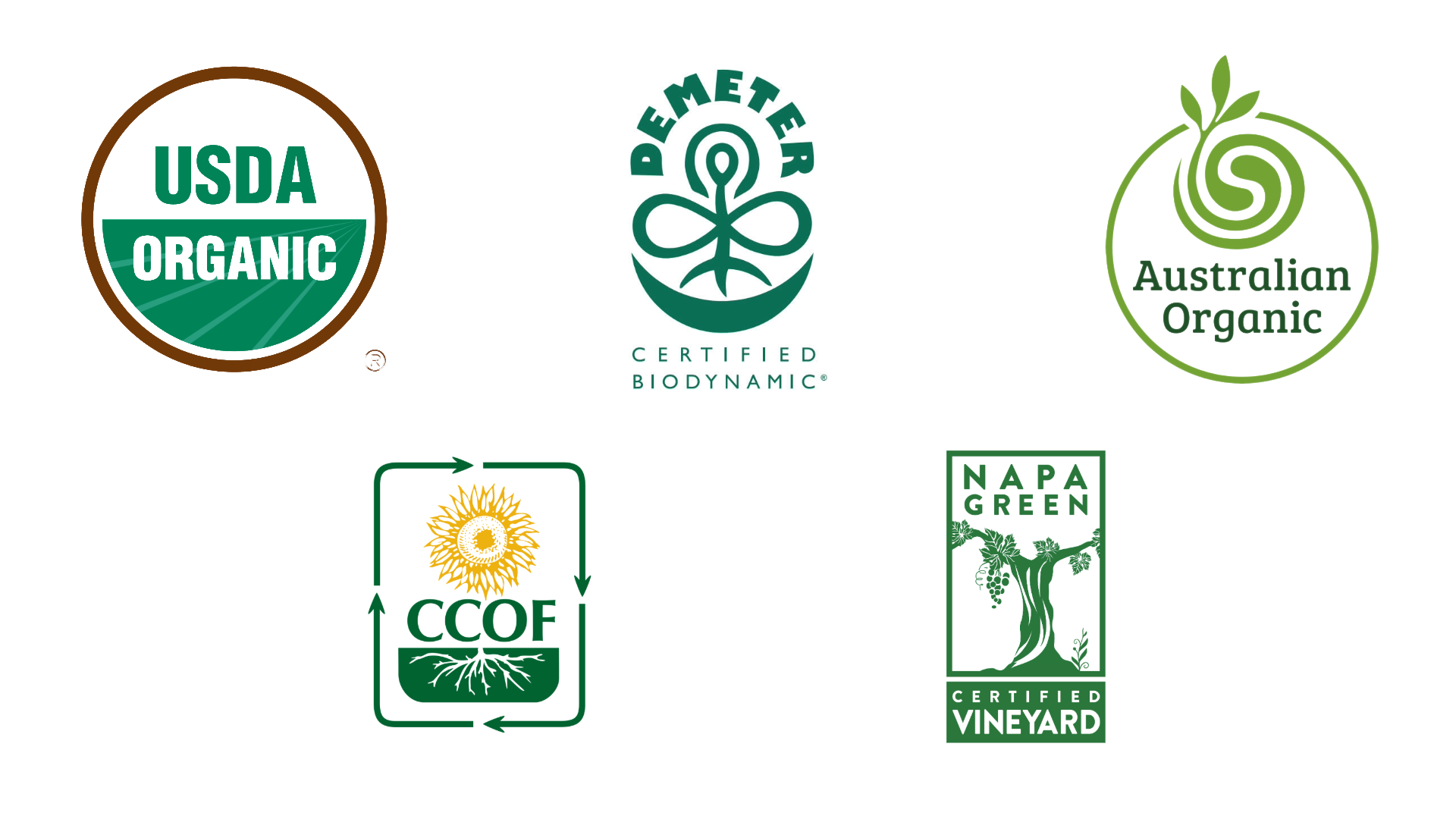
Key Wine Certifications to Know
California Certified Organic Farmers (CCOF)
One of the most respected organic certifications in California. It requires vineyards to avoid synthetic pesticides, herbicides, and fertilizers while undergoing annual third-party inspections.
USDA Organic
A federal certification that prohibits synthetic inputs and requires strict organic standards throughout production. Wines labeled “USDA Organic” cannot contain added sulfites.
Demeter International
Biodynamic certification treats the vineyard as a self-sustaining ecosystem and includes practices focused on soil health, biodiversity, and natural agricultural cycles.
Napa Green
A regional program that verifies environmentally responsible farming, water conservation, habitat protection, and energy efficiency within Napa Valley.
What Certifications Cannot Tell You
Certifications confirm certain practices, but they do not fully define how a wine will taste or how carefully it was made. Many decisions that shape the character of a wine are not reflected on the label.
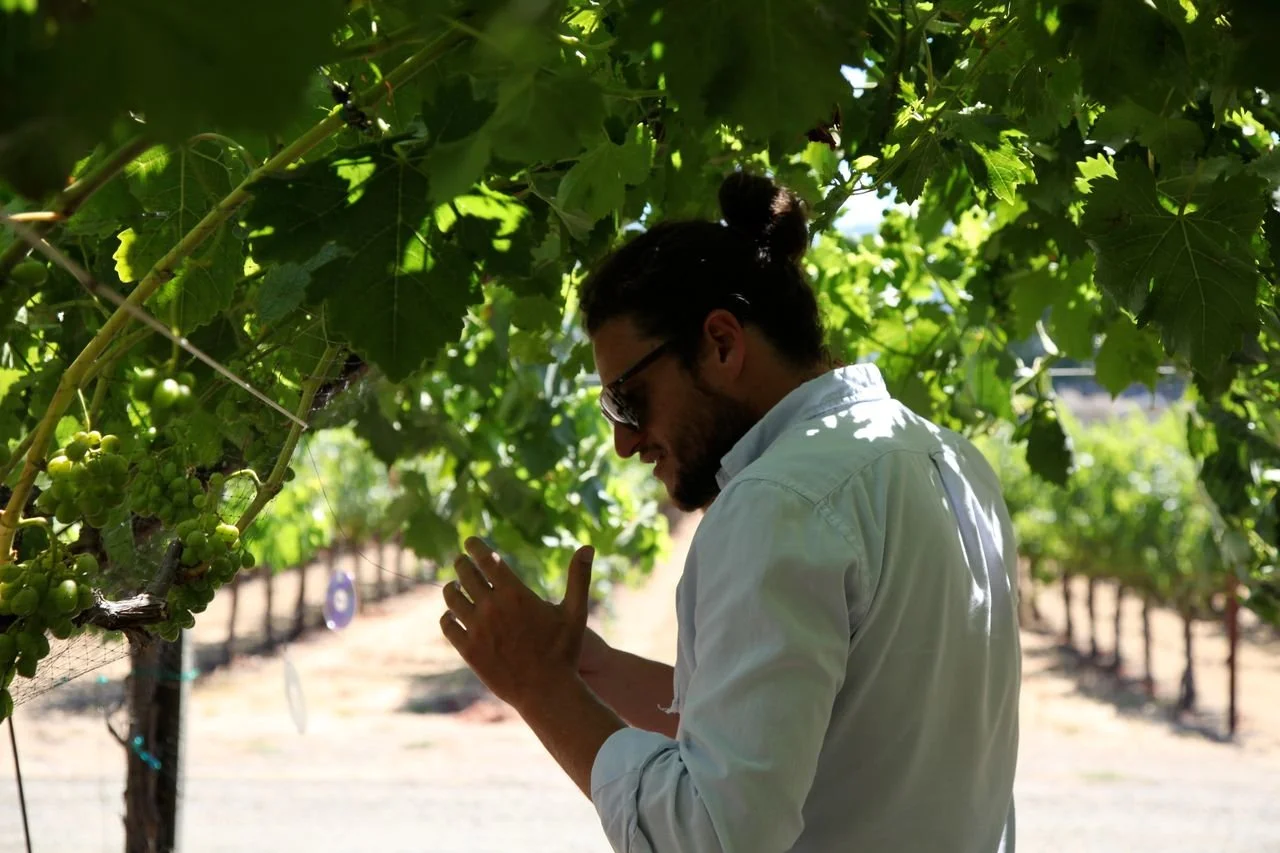
Choices such as harvesting at natural ripeness, dry farming instead of irrigating, fermenting with native yeasts, or bottling unfined and unfiltered are philosophical decisions rather than certifiable rules. These choices often reveal themselves not through a certification logo but through the character and energy of the wine itself.
How LOLA Approaches Certification
At LOLA, certifications are part of a broader commitment to responsible farming and transparent winemaking. The classic wine lineup carries certification from California Certified Organic Farmers, verifying that the vineyards and production meet strict organic standards.
Beyond formal certification, the winery also practices organic farming across additional vineyard sites and uses techniques such as dry farming and minimal intervention in the cellar. The goal is not simply to meet certification requirements, but to produce wines that reflect their vineyard origins as clearly as possible.
In the end, certifications provide a useful starting point for understanding a wine. The rest of the story is revealed in the vineyard, in the cellar, and ultimately in the glass.